
Click here to return to the list of event reports
D-DAY 65th ANNIVERSARY RALLY
3rd -10th June 2009
As far back as July 2008 Mark Handley, committee member of the East Anglia Section BMW Club placed the first announcement for an intended Rally to Normandy to be present at the 65th D-Day Landings Anniversary in June 2009.
Many replies were received and on the departure day for some of us, Wednesday 3rd June 2009, over forty members had signed up. I list various figures for this trip at the end of the report.
The format was that Mark would arrange the outline of the rally and a coach trip (more on this later) and it was up to individuals to book their own ferry crossings, camp site pitches or chalet.
I had booked my Sea France ferry return ticket by September and got an excellent rate of £27.00 return.
I also booked my chalet and was sharing this with Jon Price, a committee member too.
My 1200GS was packed and ready Tuesday evening.
Wednesday 3rd June
At 5am on Wednesday 3rd June I set off to Dover to catch the 08.00am ferry, the day being sunny and dry.
On the Chelmsford by-pass I came up on Matt & Sarah Butcher on their GS but after the Dartford Tunnel we split, they going via the M2 and me by the M20. As I was early I stopped at Maidstone Services for a cup of hot chocolate and then rode on into Dover, filling up at the BP station by the first roundabout. Just a note!! Fill up in Dover so you get a good start on the peage in France.
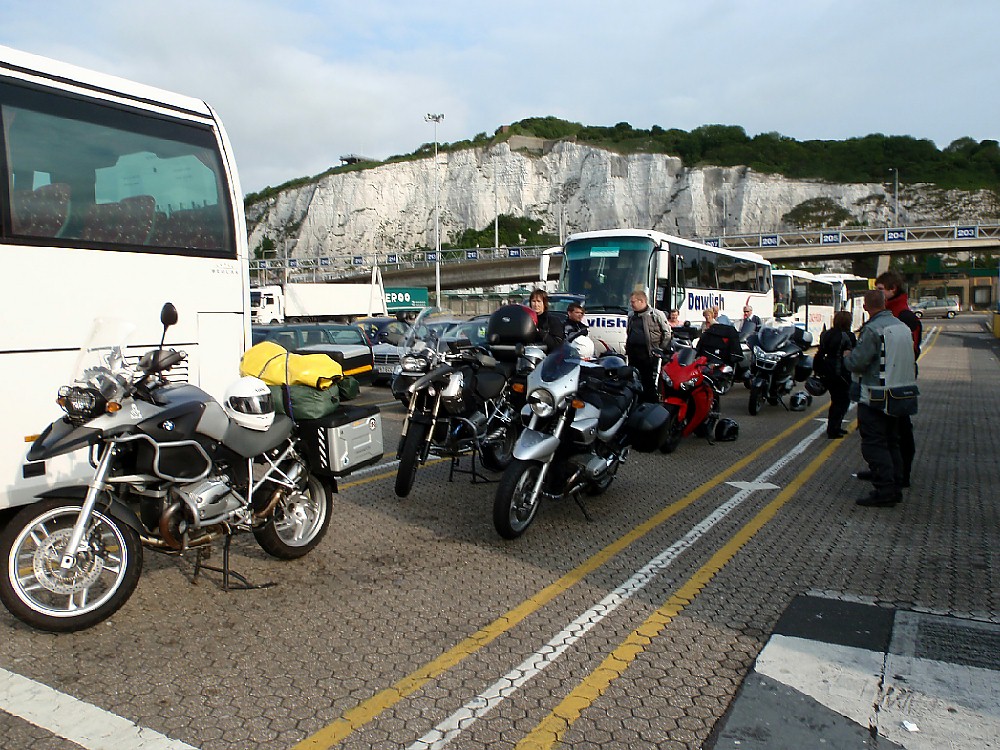
Awaiting the ferry at Dover
My trusty GPS took us out of Calais and I made an error by not turning right onto the A16 much to the amazement of my trusting colleagues who were following me! After a short off route we were soon back on course and rode for about an hour and a half to a filling station to re-fuel. Here we split into two groups with Matt & Sarah riding with Jon and Tom riding with me. I think two bikes are ideal for long fast peage routes as one has company when stopping for food.
We all arrived safely in St.Aubin-Sur-Mer where we were staying at the Cote de Nacre Camping Village. I had camped here before some years ago and it has been further improved with excellent chalet accommodation.

Chalet 201
We met up for drinks and a meal in the Camp restaurant and after a walk to the sea front, turned in for a good sleep.
Thursday 4th June
Next morning, Thursday 4th June dawned bright and clear and after breakfast Matt and Sarah led Jon and me off to look over the Maisey Battery. This site was only discovered in a buried state a few years ago and dug out to reveal original bunkers, trenches, gun emplacements and sleeping bunkers (Type 622!).
From here we rode into Bayeaux to a LeClerk supermarket for stores. Then back to the camp site for drinks and dinner.
The restaurant at the camp site was generally found to be good value and was open all day. Also on site is a launderette and small general stores. There is a good covered (or uncovered in good weather) swimming pool. Here, as I understand in other public pools, the use of boxer shorts is forbidden so, pre-warned of this I had purchased at the bargain price of £2.00 a pair of Speedo type trunks. I received a fair amount of ribbing about these (still wonder what everyone else had to wear) but as things turned out I didn’t actually go for a swim so prevented further ribaldry.

Campsite restaurant
Friday 5th June
Mark Handley had set up one or two ride outs and on Friday 5th June a number of us ( I offered to be back marker) set off on a sunny day to the Grand Bunker at Ouisterham – it is here that the ferry from Portsmouth now docks.
On the way, the Historic Flight comprising the Lancaster and Spitfires flew right over us on their way to a display.

Parked up at Grand Bunker, Ouisterham
The Grand Bunker was built to control the German coastal guns in the area. Its is a very large and tall block with many floors and rooms, almost completely intact and filled with original war time items such as radios, rifles, machine guns and dummies dressed in various German uniforms. One of these dummies has a very peculiar grin which made most of us laugh!
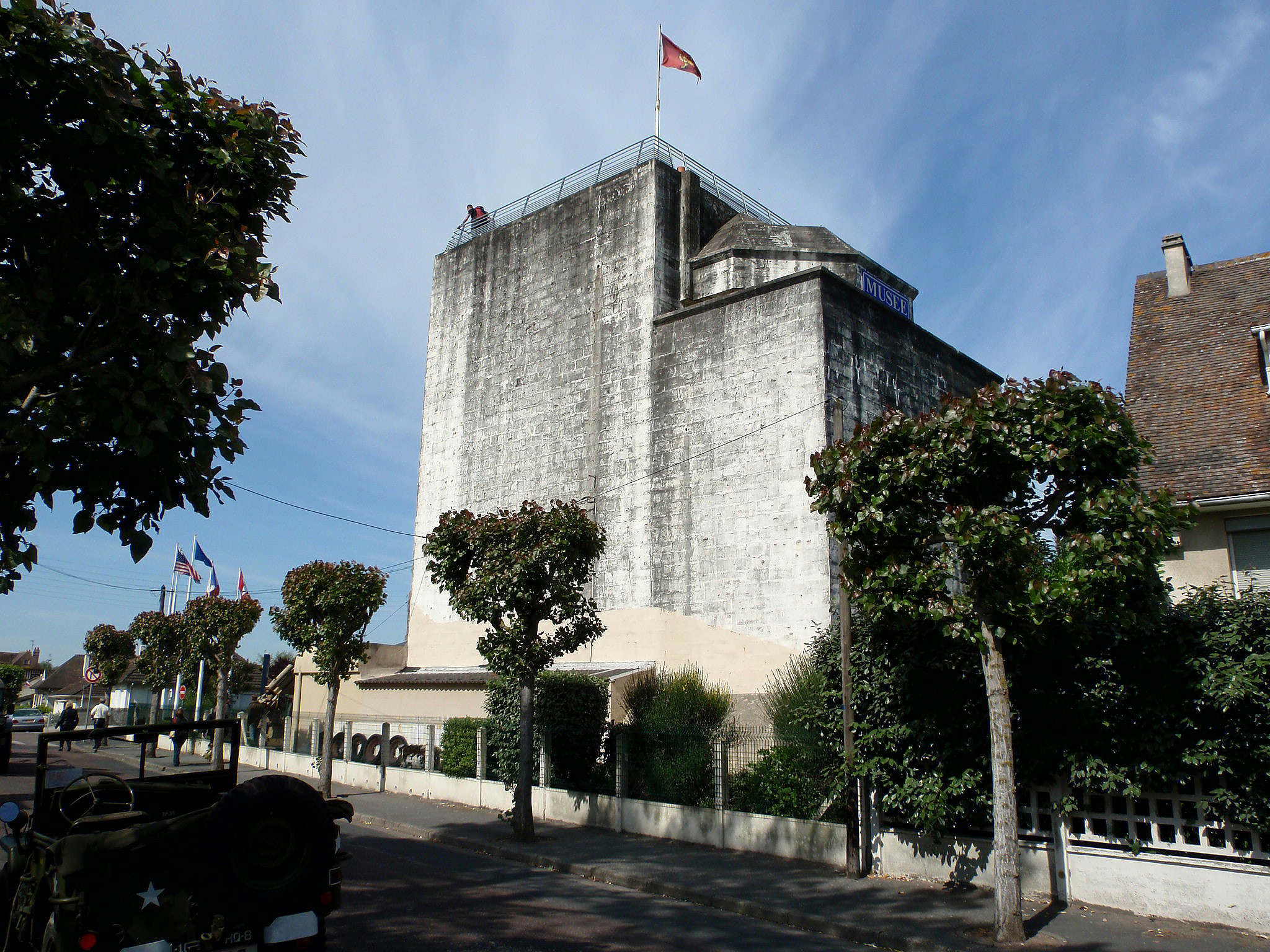
Grand Bunker, Ouisterham
At the very top there is an observation level where a large range finding optical sight is mounted – looking through this none of us could see anything! Good views over the town and to the beaches.

View of Beaches from top of Grand Bunker
From here Mark led us to the Merville Battery, across the river where it’s guns covered the port area and beaches for a large area. On the way we were diverted by gendarmes and after a complete circle arrived at the site.
From here Mark led us to the Melville Battery, across the river where it’s guns covered the port area and beaches for a large area. On the way we were diverted by gendarmes and after a complete circle arrived at the site.
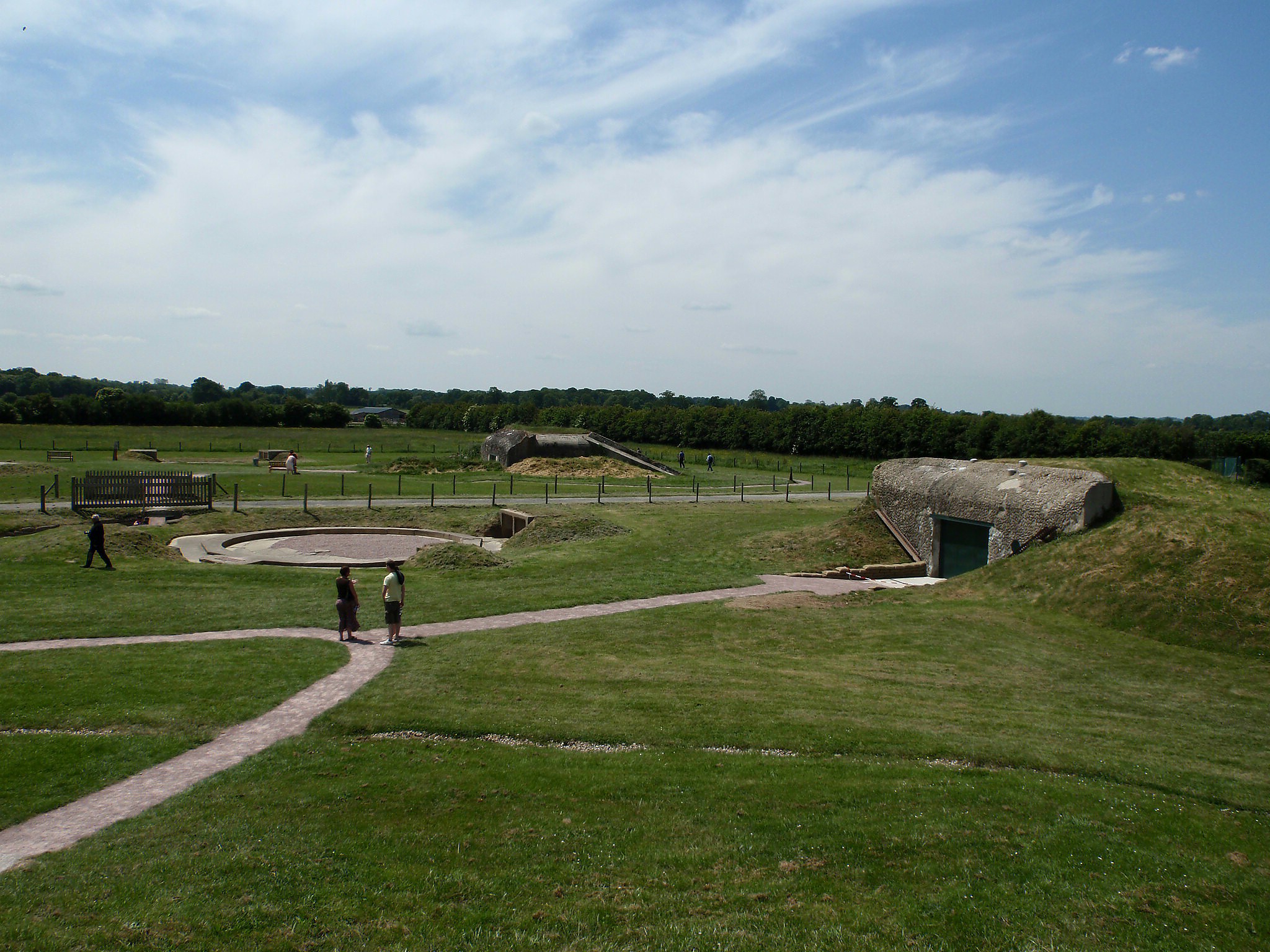
Melville battery
There are large bunkers but all but one closed to the public. There was a number of soldiers with vehicles camping here – see photos. The actual site for me was a little disappointing especially as there were no original guns at all. We speculated on this and decided that after the war the local scrap dealers had a ball salvaging all the war debris.
The next location was Pegasus Bridge, famous for an airborne landing of Allied troops which was highly accurate and managed to take the bridge intact before the Germans could blow it up.
%201%2050609.JPG)
Pegasus Bridge (replacement)
The first two casualties of the D-Day Landings occurred here as this assault preceded the actual beach landings. A corporal was drowned and a Lieutenant was shot as he crossed the Pegasus Bridge.
As we rode up to park close to the new museum by the bridge (the original bridge is part of the museum attractions) we passed about 100 old army motorcycles all lined up and waiting to ride off in convoy. There were also any other vehicles passing both way over the bridge.
Most of us made our way to the café by the bridge for some refreshments.

Café Gondree
It was here I was privileged to meet one or two veterans.

Veteran at Pegasus Bridge
We rode our separate ways back to the camp site and after a wash some of us walked into town for a meal in one of the any good restaurants located there.
We ended up in the Hotel St Aubin, close by the flags and canon as it was here that the firework display would take place. In fact, all along the coast fireworks were to be let off.
After a coffee in the hotel we emerged to find the road cordoned off by the gendarmes and we were right in the front line for the fireworks – a gendarme came up to move us on saying it was dangerous to stand too close but after we moved a little he left us alone!
For over an hour a superb firework display continued and this was repeated all along the coast at each town.

Fireworks at St Aubin
Saturday 6th June
The day dawned sunny but would change later! Several of us walked into town for the two services of remembrance held on the sea front by the canon and flags. The first service was for the 48th Commandos who stormed the beach and was addresses first by an English Chaplain and the by the French Mayor of St. Aubin-sur-Mer who spoke in French and English. A particular part of the service I remember well "we shall never forget those who died to liberate us". This focussed the whole trip for me. I was standing behind a veteran who formed part of a line-up of old soldiers and I asked him if he was here in 1944. "Yes" he replied "I came up that beach". That was all he said.

Service on 6th June at St. Aubin-sur-Mer
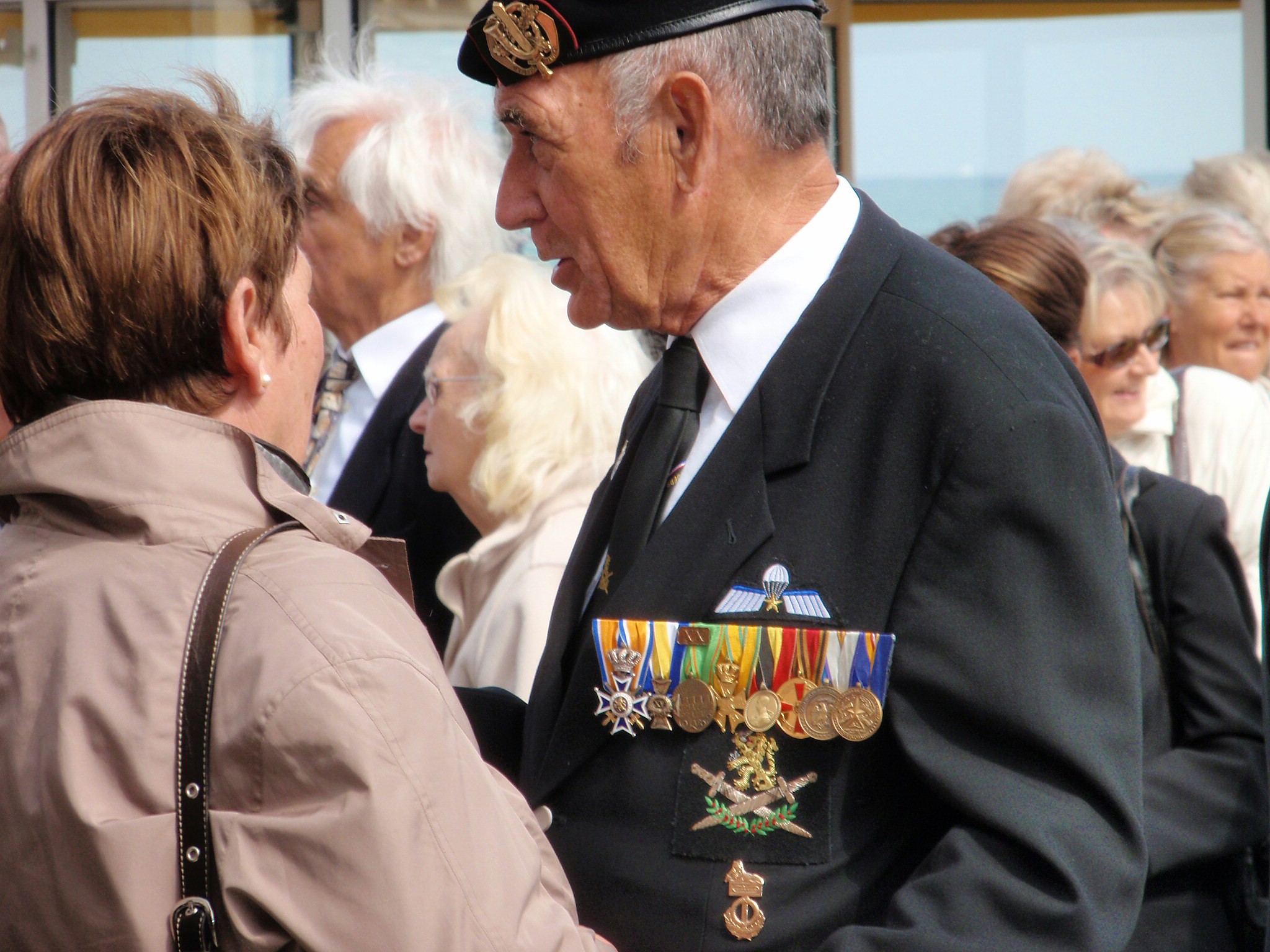
Veteran at Service St. Aubin-sur-Mer
The second service carried out a few hundred yards down the sea front was to remember the Canadian soldiers who lost their lives during the assault on this beach.
Back to the camp site and a spot of lunch then at 4pm Mark had arranged a coach to take us all into St. Mere Eglise, a town about 50 miles inland and the location where there was a large airborne assault those any years ago.
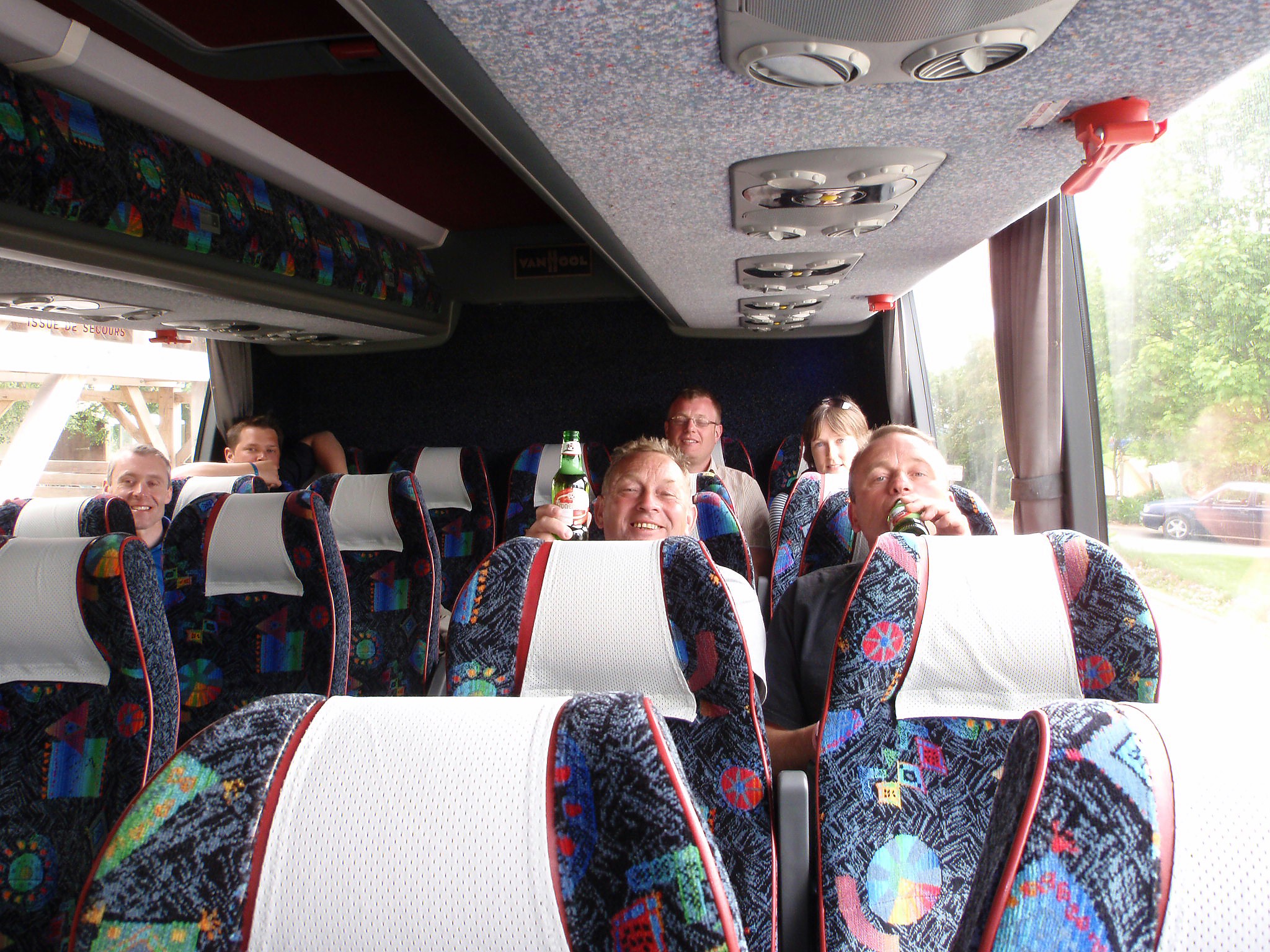
On the coach to St. Mere Eglise
It has remained famous by the story of an Allied parachutist who fell on to the church tower and his parachute snagged up leaving him hanging there. The story goes he was rescued by the Germans and placed under guard but was eventually freed by the advancing Allies. Probably qualified for the shortest captured allied soldier!
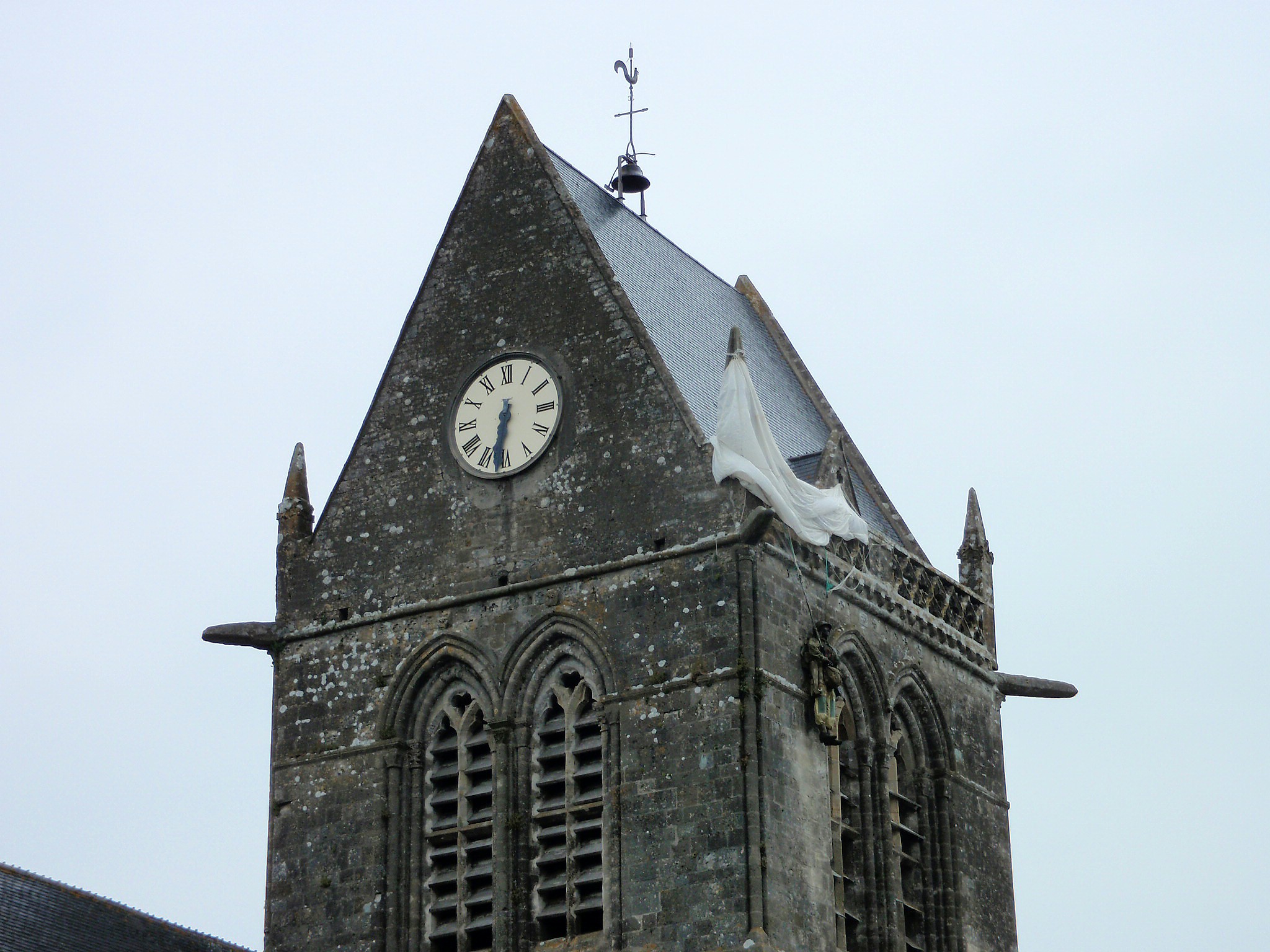
Parachutist on Church at St. Mere Eglise
By the time we boarded the coach it was raining and on arrival at St. Mere Eglise we all searched out cover from the rain. Some of us located a restaurant and had an excellent dinner and then ventured out (not too quickly) into the pouring rain. My foot wear was not the best but I had brought along a waterproof jacket with hood!
There were crowds of people in the town square with a barbeque and music but the bad weather did put a damper on things. Mark and I walked around and eventually ended up at the back of the Airborne Museum (closed at 7pm!) and found a large workshop with various vehicles and groups of real and re-enactment soldiers (both sexes) and beer at 2 euros a can! One of the vehicles was an original large half track German troop carrier which had been found some years ago in poor state and rebuilt over eight years. It was huge with a V12 petrol engine and several rows of seats over the tracks. The placard said it was also used originally to retrieve tanks – it weighed 17 tons!

17 ton German halftrack
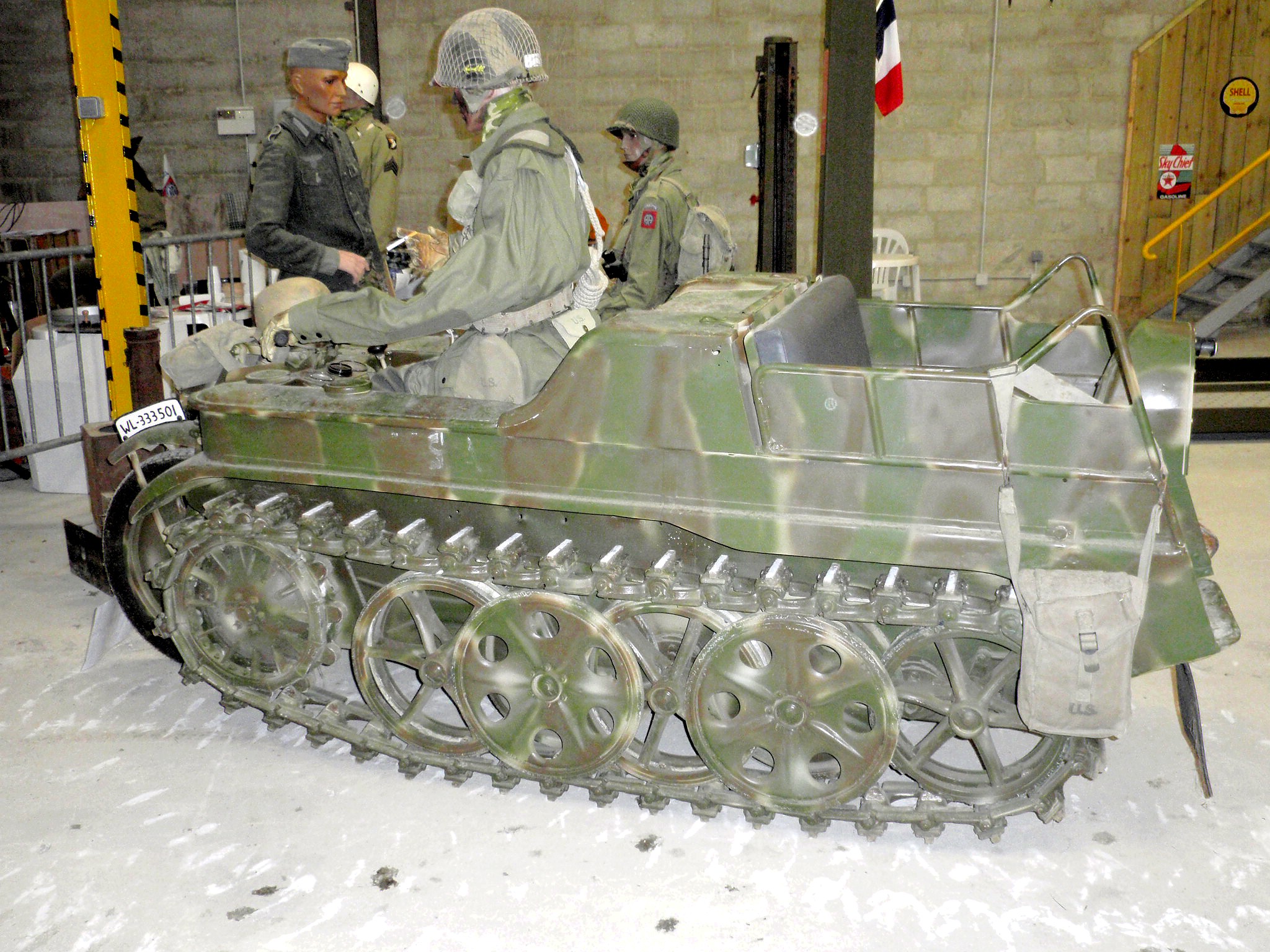
Smaller halftrack
I think we were all glad to get back on the coach at 11pm and head for home and our beds.
Sunday 7th June
Another wet day greeted us as we assembled for a ride out to La Fiere Bridge, some 8 miles east of St. Mere Eglise.
Some two miles from the bridge our party got split and I moved to the front to lead the remainder (by GPS) to a field near the bridge. There were one or two diversions and thanks to the GPS we found ourselves on an unmade road which took us 2 kilometres to a field with wet grass covering invisible ruts – I was on a GS but it was not pleasant! It was still raining!

Parked up in the wet rutted field!
We walked down the track to the bridge area where the original manor house is still standing – from here I photographed La Fiere Bridge.
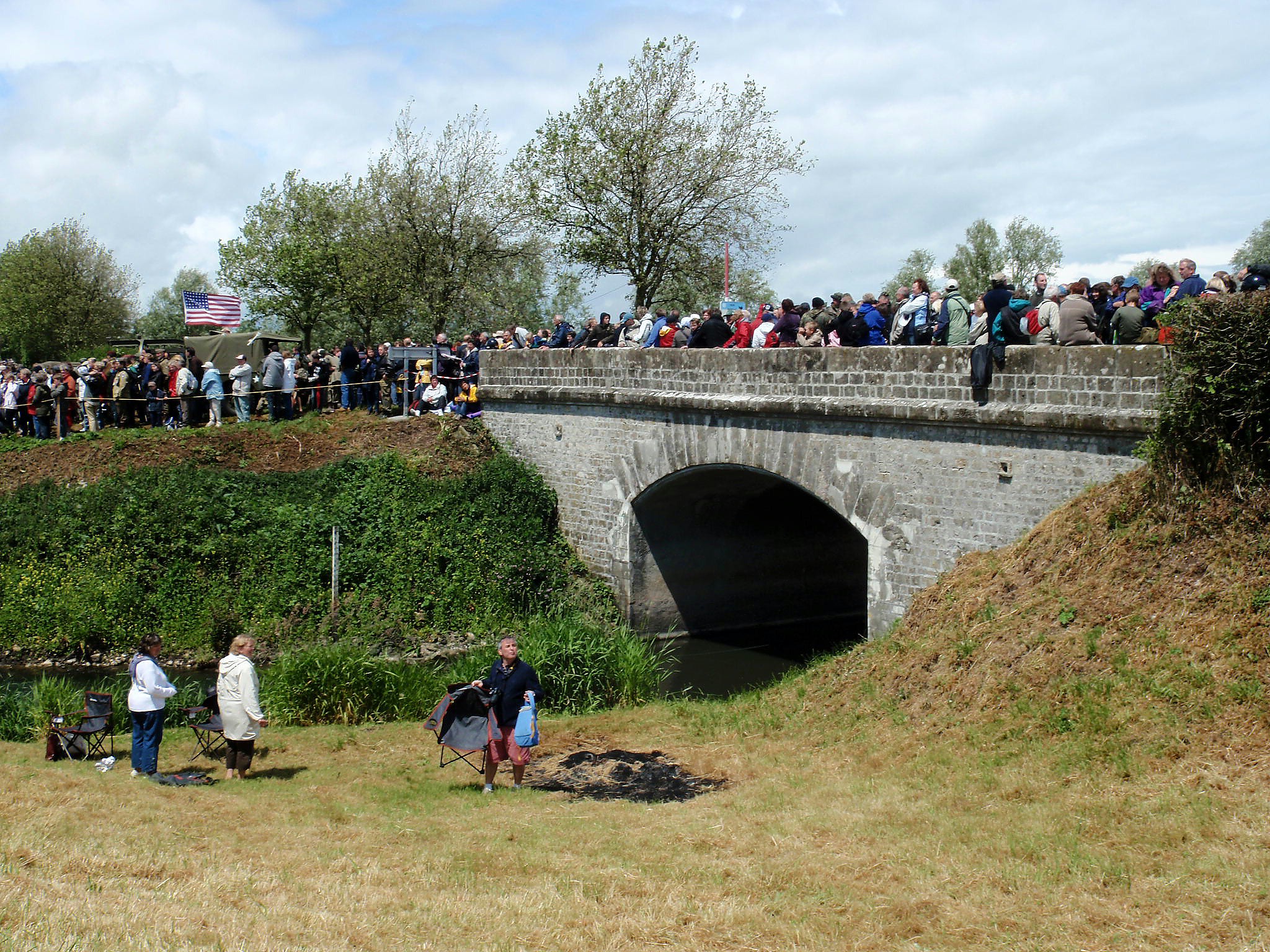
La Fiere bridge
This bridge was in a strategic position as it carried all traffic over the River Merderet. It was here that a large force of airborne American paratroopers dropped to secure the bridge. They met a strong German force and were attacked by three tanks and many mortar and machine guns. The Germans had to keep the bridge in order to move reinforcements to the area. Some three days of heavy fighting finally secured the bridge for the Allies.
At around 2pm several Hercules aircraft appeared and dropped some 500 parachutists right in front of the very large crowd. A magnificent display. One unfortunate paratrooper was blown into the crowd and another broke his leg!
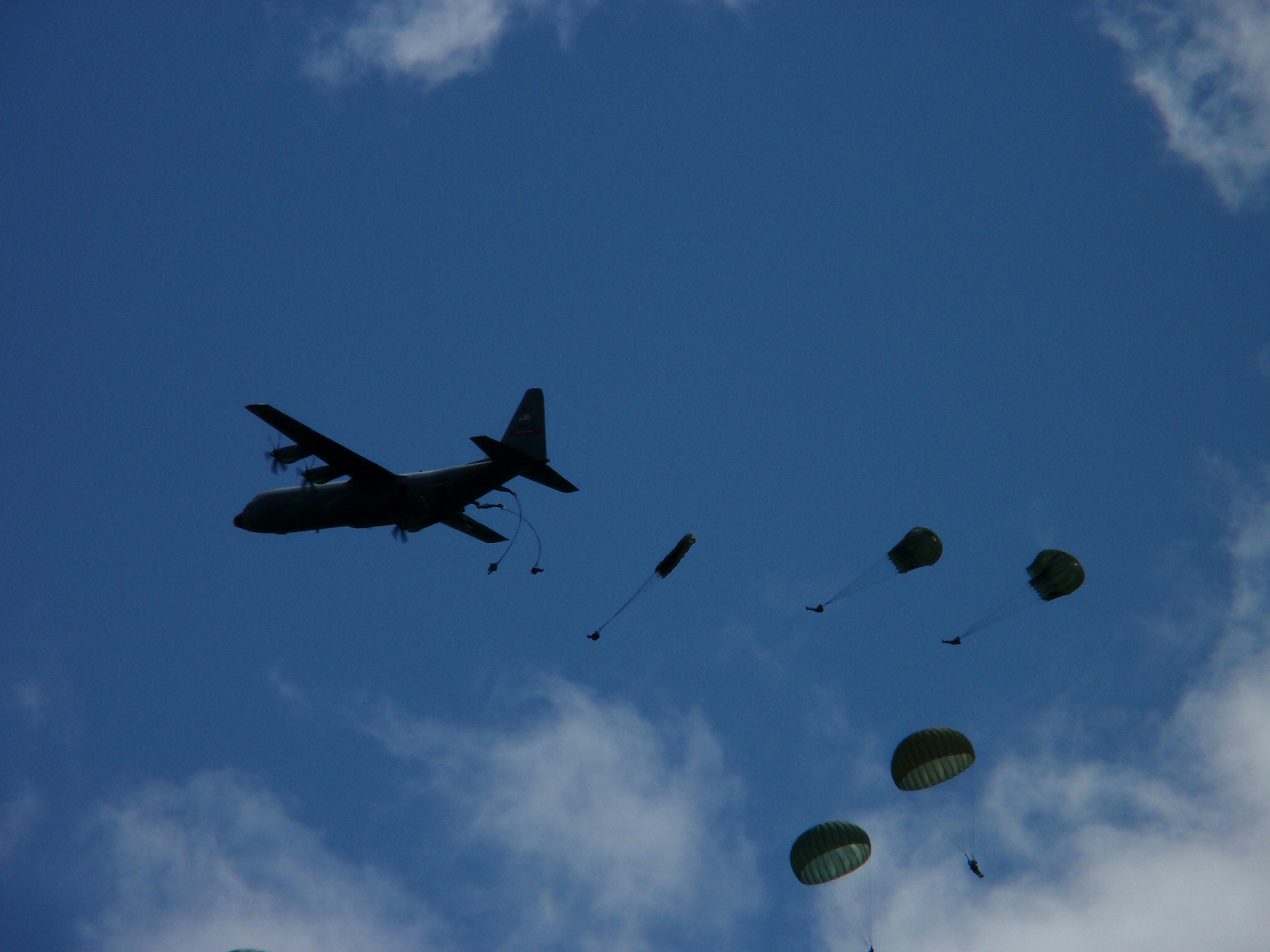
Parachutists
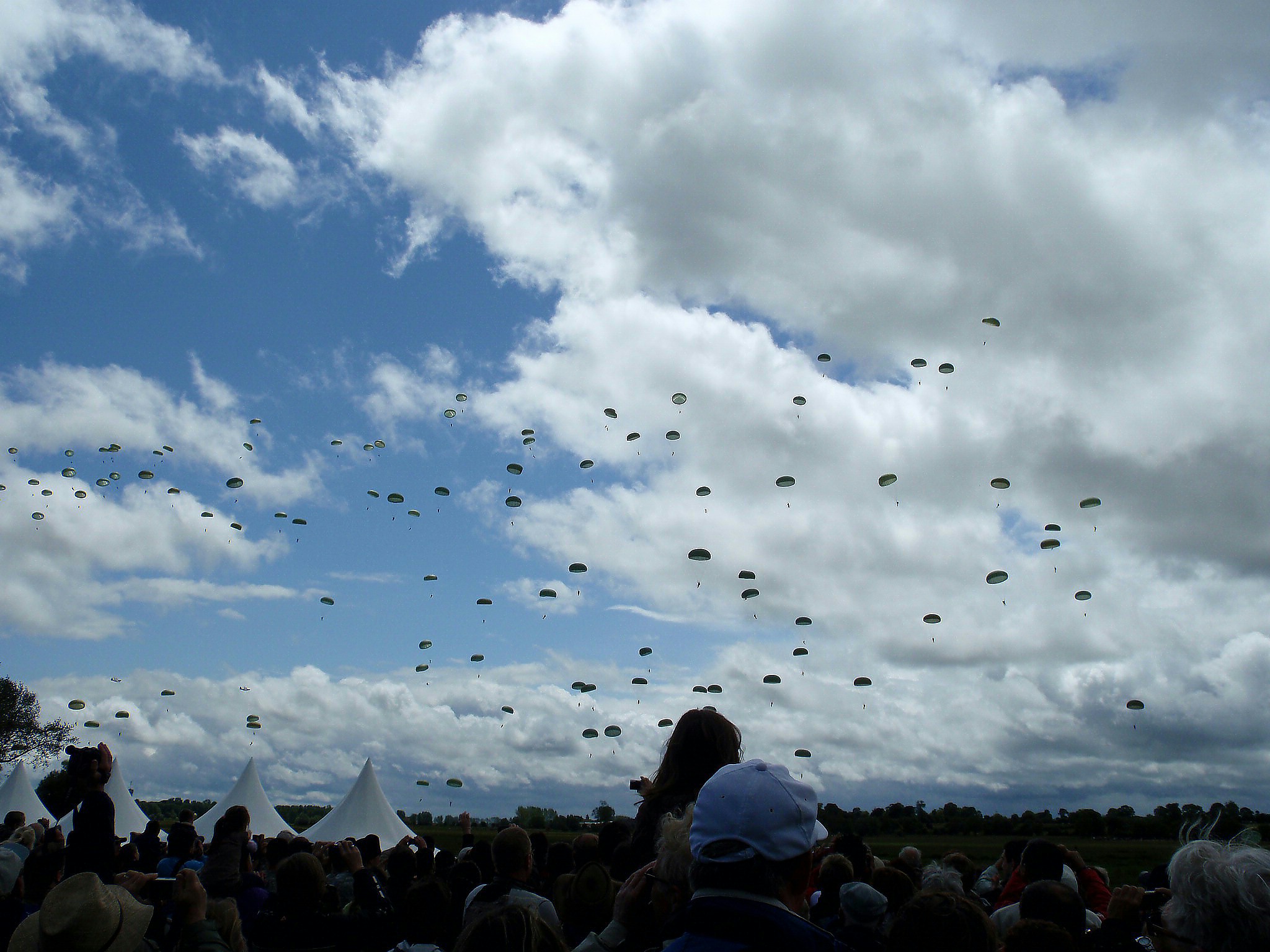
The sky full of parachutists
We had planned to ride on to see other places but the rain stopped that so we all made our way back to the campsite after a really enjoyable display.
Whilst having a drink in the bar later a group came on to the small stage and sang some songs, some in English. Nothing odd in this but what was rather peculiar was the lead singer who was wearing a kilt and football boots!!

The strange singer wearing a kilt and football boots!
Monday 8th June
The morning dawned with more rain but three of us, Mark, Chris (USA) and me rode off to Mont St Michel, some 75 miles north west across the Cherbourg peninsular.
The Mont is an imposing sight as you approach it and we stopped on the causeway to take some photos.

On the causeway to Mont St. Michel
We were directed to the car park and on riding up as far as we could we discovered a special place for motorcycles which meant a shorter walk! This is a popular place and rows of coaches, camper vans and cars confirmed this.
First on the agenda was lunch so we picked a good looking place which was too expensive for hoards of Japanese kids milling around and enjoyed an excellent lunch – mine was grilled salmon. One of the joys of France is the usually excellent food.

Lunch on Mont St. Michel
A walk around the medieval abbey was interesting and much larger than it’s counterpart in Cornwall.
There is a row of shops in the lower part of the village all selling the customary tourist items.
Chris and I walked on to the entrance to the abbey towards the top but declined the 13 euros entrance fee!

The abbey spires at Mont St. Michel
We met up with Mark and set off back to the campsite.
Tuesday 9th June
The morning was wet so I tidied up the chalet (my colleague Jon had left the day before to get back to work – oh the joys of being retired) and packed most of my gear ready for the return ride tomorrow.
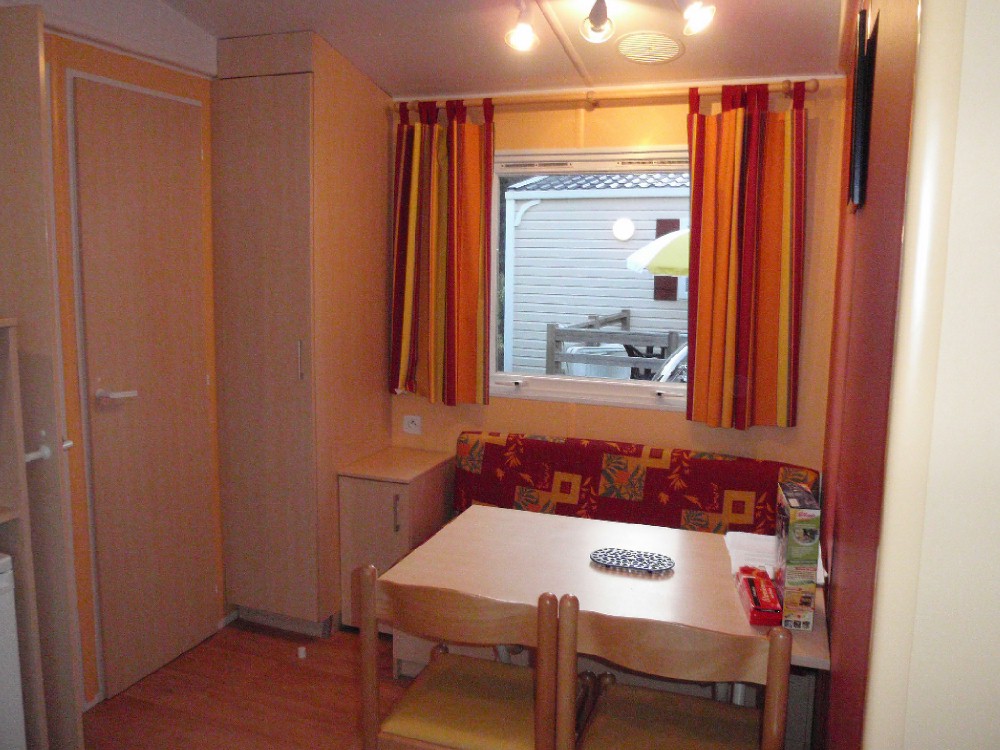
Dining area in Chalet 201
After lunch it dried up so I rode off to Arromache to look at the Circular Cinema and the remains of the Mulberry Harbour which is still evident, curving it’s way around the bay.

Arromache

Remains of Mulberry harbour at Arromache

Mulberry Harbour still visable after 65 years
From the cliffs above Arromache these remains are clearly visible. It was an immense task building this artificial harbour and then towing all the sections across the Channel to sink them at Arromache to form this huge harbour. It is worth looking at some statistics of this harbour. The harbour was to be built with Caissons and old merchant ships. Briefly, some 300 firms employing 40-45,000 personnel were used to build 212 Caissons in concrete and steel. The Caissons ranged from 1672 tons to 6044 tons each and used some 2 million tons of steel and concrete. Some were fitted with anti-aircraft guns and one is reputed to have shot done 9 out 12 Messerschmitts attacking it!
To make up more harbour walls, some 70 merchant ships, nicknamed Gooseberries were stripped of all unnecessary gear, partly ballasted and primed with explosive charges. These were all amassed at Oban, Scotland and navigated under their own steam to arrive on site when required, where they were sunk. When the outer harbour was complete with the caissons and merchant ships it formed a protected area several kilometres long.
Inside the outer wall were built long jetties so that ships could unload supplies and lorries.
This colossal undertaking had started in 1941 with several different ideas and finally came together with most of the caissons being built on the Thames and Clyde.
The Mulberry Harbours were constructed to supply the huge amount of food and equipment needed to support after the D-Day Landings the push into France. It only took a few weeks to actually assemble the harbour, after years of design and about 2 years in construction.
After the war at the Nurembeurg Trials, Albert Speer gave the enemy prospective on the Mulberry Harbours and their Atlantic Wall defences. To construct our defences we had in two years used some 13 million cubic metres of concrete and 1.5 million tons of steel. A fortnight after the landings by the enemy, this costly effort was brought to nothing because of an idea of simple genius.
Wednesday 10th June 2009
The day to ride home was sunny and dry! I left the campsite at 09.30am and made Calais at 13.30 after a stop for lunch and fuel. I paid an extra fee to board an earlier ferry, arriving home at 17.00 BST.
So ended a very enjoyable holiday coupled with a unique experience – to be present at the 65th D-Day Landing Anniversary. It is not known if another gathering of such magnitude will take place but as one veteran I spoke to said "I will be back again".
Many thanks for all those who attended this Rally as it you who made it a success.
Statistics:
44 Club members attended + 7 from UKGSers (51 total)
19 from East Anglia Section, remainder from Southern, South West, Western, Yorkshire, Northern and London.
Overseas: 3 from Jersey (Chaz +Carolyn and Kevin Carre), 1 from France (Mike Fishwick),
Chris Tyler (Dallas, Texas, USA – living in Mainz, Germany.
Statistics of the trip for me (Mike Davies):
Ferry Crossing £27.00 return + £10.00 for early ferry back.
Chalet cost: 390 euros split between two of us.
Total mileage: 1142 miles
Average speed: 51.2 mph
Petrol consumption: 46.14 mpg ( R1200GS) ( about 800 miles on peage and dual carriage way)
Oil used: only 250ml to top after 4,000 miles since last service (now on Castrol Actevo 20/50)
The sight glass is still full!